18th Century English Cricket Table in Pine and Ash
SKU: CRICK1
Couldn't load collection availability
UK Mainland Delivery & Non-Mainland
UK Mainland Delivery & Non-Mainland
* Until Christmas we are offering FREE UK MAINLAND doorstep delivery.
For UK Non-Mainland:
At checkout, please select ‘Pick up’ (not ‘Ship’) to complete your purchase.
You can either:
• Proceed with payment and we’ll send a separate link for delivery, or
• Contact us first for a quote, and we’ll send you a custom order link with delivery included.
Placing items in specific locations can be arranged on request — additional costs will apply. Our trusted fine art and antique couriers, ensuring your item arrives safely and with care.
International shipping
International shipping
International delivery, crating, shipping, and insurance can be arranged on request. We’ll provide a quote based on your needs—additional costs will apply and are payable directly to the shipping company.
You’re welcome to use your own shipping agent, or proceed with our recommended agent using the quote we supply. Payment is made directly to the shipping company.
Alternatively, select ‘Pick up’ at checkout to:
• Collect the item yourself
• Use your own shipping agent from our UK showroom
• Or simply complete your purchase
Contact us for a quote
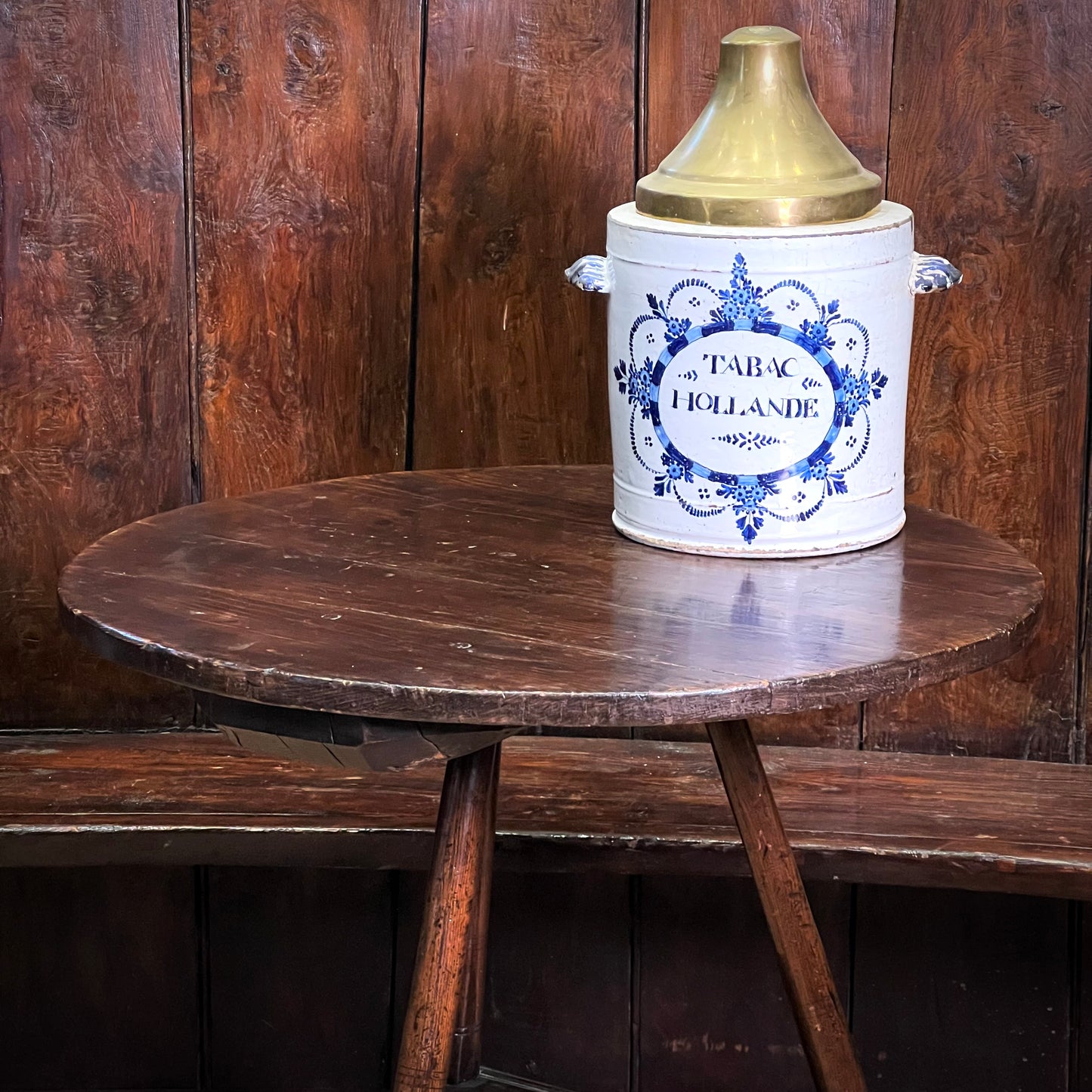
A fine 18th century English cricket table with a circular pine plank top raised on three turned ash legs.
The legs are elegantly splayed and joined by a triangular under-tier, giving the table both structural strength and a distinctive sculptural presence. Each leg is crisply turned with delicate incised line decoration, adding a subtle refinement to what is otherwise a direct and honest vernacular form.
Beneath the top sits a rough hewn, irregular supporting slab — a characteristic element of early country construction — while the top itself displays excellent colour and a deeply worn patina developed through generations of use.
Cricket tables belong to a long tradition of English vernacular furniture, particularly associated with rural interiors of the West Country and Wales. The name is thought to derive from the earlier dialect term “cracket”, referring to a small stool or low seat. The form provided inherent stability while allowing rural craftsmen to construct furniture efficiently using simple tools and locally available timbers.
Originating in the 16th century, by the 17th and 18th centuries these were common in taverns and used in domestic households, often retaining the characteristic tripod structure and sometimes incorporating stretchers or under-tiers as the top increased in size.
With its strong form, attractive turning and wonderful time-worn surface, this example has the sculptural simplicity that defines the best English country furniture of the period.
- Width: 74 cm (29.13″)
- Height: 78 cm (30.71″)
- Depth: 74 cm (29.13″)